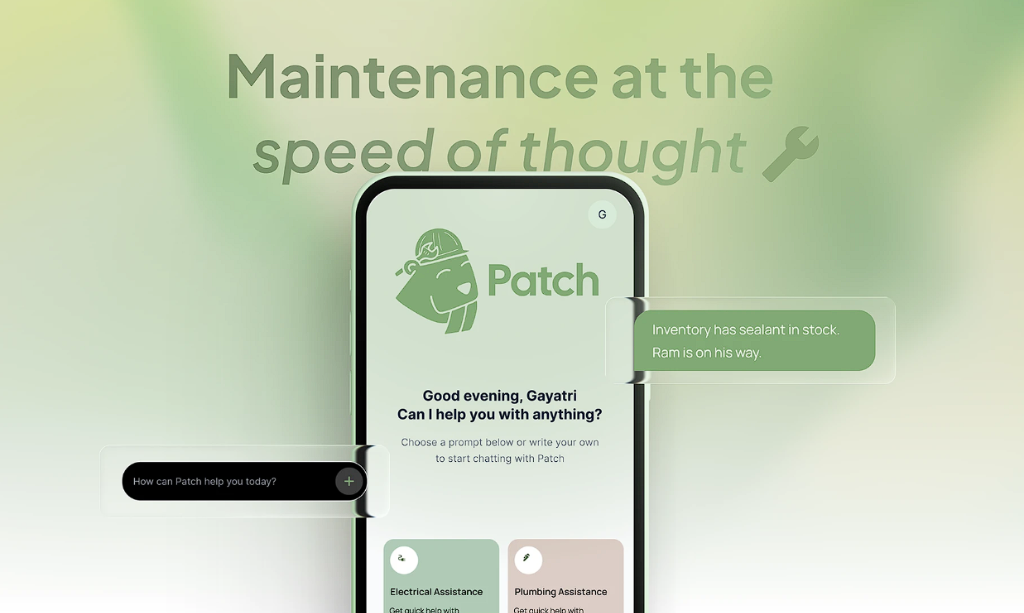
A proactive maintenance assistant for apartment complexes, designed to diagnose issues, prioritize urgency, and remember every repair.
ROLE
Product Designer(concept to final UI)
TYPE
Personal / concept project
FOCUS
AI agent designconversational UX, service design
SCOPE
3 personas3 design pillars, 4 agent modes
01 / THE PROBLEM
The Maintenance Gap
"Manual coordination breaks maintenance quality down at scale. Residents chase status updates by calling management repeatedly. Managers triage urgent issues out of chaotic WhatsApp threads. And without proper diagnosis upfront, technicians waste an estimated 30% of visits on wrong parts or missing context."
02 / WHO I DESIGNED FOR
Two sides of the same problem
Apartment repairs require bridging the gap between tenant urgency and facility operational bandwidth.
TENANT PERSONA · WORKING PROFESSIONAL
Ananya Patel, 29
RESIDENT
CORE PRIORITY
Swift resolution of maintenance issues
Key Challenges
Limited availability to coordinate repair visits during standard business hours
Fragmented communication between building management and residents
Difficulty describing technical issues accurately
What She Needs
Automated reporting, log common issues via text or app instead of making a call
Real-time updates, live repair status without needing to follow up
OPERATIONS PERSONA · SENIOR FACILITY MANAGER
Sameer Kumar, 42
FACILITY LEAD
CORE PRIORITY
Prioritize urgent repairs and get them resolved
Key Challenges
High volume of repetitive tenant inquiries clogging the pipeline with genuinely critical issues
Incomplete resident and vendor profiles leading to inefficient dispatch
Fragmented tracking of multi-step repair work orders across properties
What He Needs
Centralized log, one actionable record of maintenance and inventory
Admin automation, an AI assistant handling repetitive intake and scheduling
03 / DESIGNING THE AGENT
Designing the agent, not just the interface
Beyond the interface, I designed Patch's actual behavior, its goals, tasks, and personality, so the product felt like a proactive collaborator, not a form to fill out.
01CORE ARCHITECTURE
3 Design Pillars
PILLAR 01Guided Diagnosis
Intake & Triage
PILLAR 02Smart Prioritization
Urgency Queue
PILLAR 03Adaptive Memory
Repair History
02EXECUTION ENGINE
4 Agent Modes
MODE 01Sense
Multi-Input
MODE 02Reason
Diagnostics
MODE 03Act
Dispatch
MODE 04Learn
Prevention
Bot goals included remote diagnosis via photo and video, DIY guidance for simple fixes, contractor prioritization, and ongoing building health logging. The design also scoped future capability such as vendor insurance verification, live technician tracking, and preventive maintenance scheduling.
04 / KEY FEATURES
Key Features
Core capabilities engineered to streamline communication, clarify technical issues, and eliminate coordination delays across apartment communities.
01CONVERSATIONAL UX
Multi-input
Text, voice, image, and location captured seamlessly in one unified conversational flow.
02REAL-TIME TELEMETRY
Automated status pings
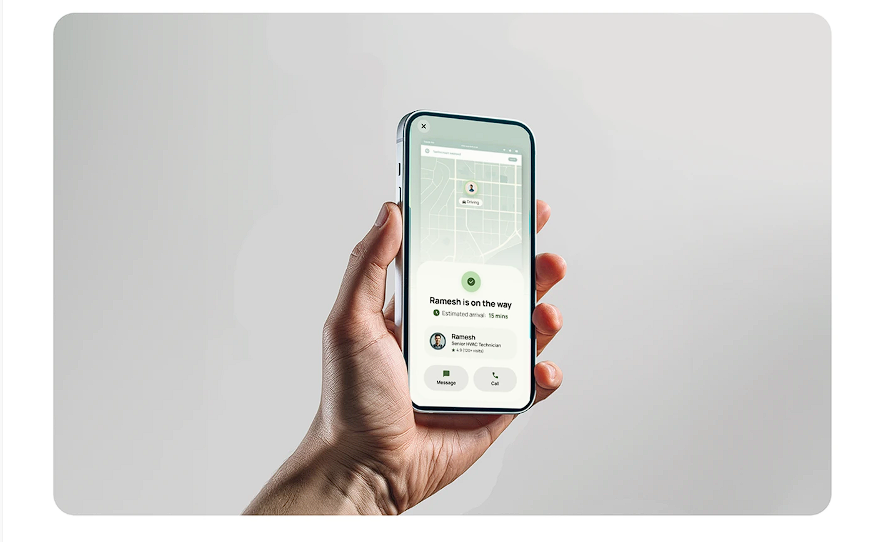
Real-time proactive updates to residents at every stage without requiring manual chasing.
03SMART TRIAGE
Guided diagnosis
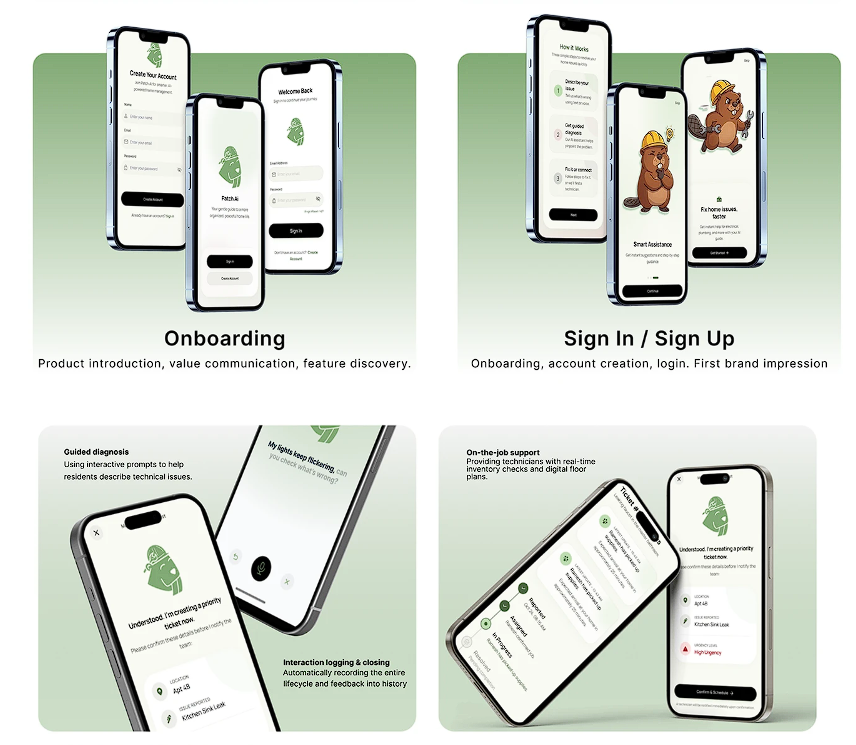
Interactive prompts that guide tenants to describe technical problems clearly and accurately.
04SERVICE ADOPTION
Onboarding
Intuitive product intro, value communication, and feature discovery right inside the first intake.
05 / VISUAL SHOWCASE
Visual Designs & Mobile Interfaces
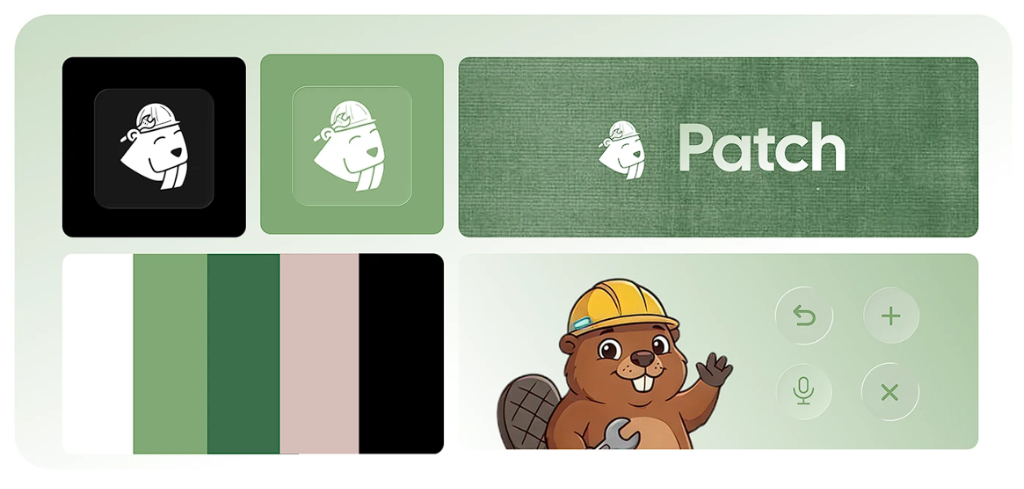
A comprehensive look across the brand identity, design tokens, onboarding flows, and real-time technician tracking interface.